
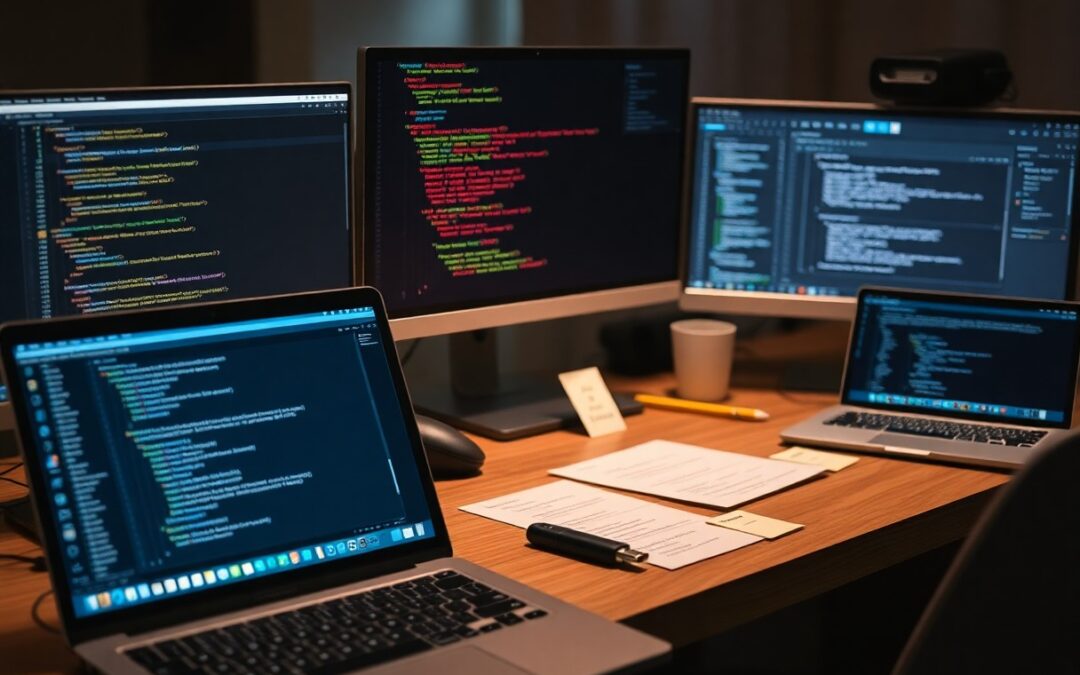
You work with others on code, and changes happen constantly. Without version control, tracking who changed what and why becomes chaotic. You risk overwriting work, losing progress, or introducing bugs unnoticed. Version control gives you a clear history, enables safe collaboration, and lets you roll back mistakes with confidence.
The War Against Digital Chaos
Order in the Codebase
You prevent overlapping changes when multiple people edit the same file. Without version control, files get overwritten, bugs creep in unnoticed, and hours vanish into fixing avoidable errors. Your team avoids confusion because every change is tracked, named, and reversible. Chaos retreats when you know exactly who changed what and why.
The Discipline of the Branch
You create a branch to isolate your work, keeping the main codebase stable while you experiment or build new features. Each branch acts as a private workspace where changes won’t disrupt others’ progress. When your code is tested and ready, you merge it with confidence, knowing collaboration stays smooth and conflicts stay minimal.

The Truth of the Commit Log
You see every decision laid bare in the commit log-each change, addition, or deletion preserved in chronological order. This history isn’t just a record; it’s a narrative of your project’s evolution. When issues arise, you trace them back to their source with precision. Your team gains clarity, not confusion, because every message answers the question: why was this done? The log becomes your project’s honest diary.
The Safety of the Rollback
You can undo changes instantly when something goes wrong. Every version is preserved, so you return to a working state with confidence. Mistakes happen, but with version control, they don’t become disasters. You protect your team’s progress by making reversions predictable and safe.
The Strength of Peer Review
You catch errors faster when others examine your code. A second set of eyes often spots logic flaws or inefficiencies you might overlook. Peer review strengthens quality because teammates challenge assumptions and suggest improvements. You learn from each other’s approaches, and collective ownership grows. This process builds more reliable software through shared accountability.
Final Words
From above, you see how version control keeps team work organized and efficient. You track every change, collaborate without overwriting each other’s code, and quickly resolve conflicts. It gives you a clear history, enables safe experimentation, and ensures project continuity. You maintain accountability and streamline development, making it a standard practice in collaborative coding.