
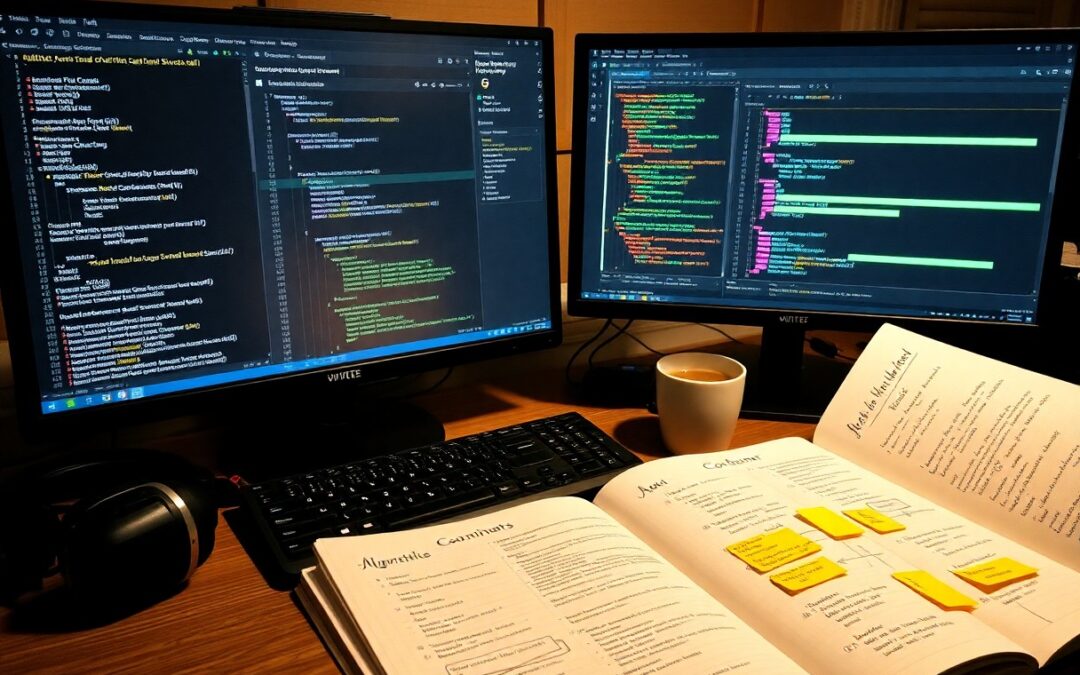
With the demand for skilled developers rising, you need a clear understanding of the technical and soft skills that define success. Mastering programming languages, problem-solving, version control, and collaboration tools is important. You must also adapt to evolving technologies and communicate effectively within teams to thrive in this field.
The Language of the Machine
Code is how you speak directly to computers, translating logic into action. You don’t just write instructions-you shape behavior, define outcomes, and solve problems with precision. Mastering this language means understanding not just syntax, but intent, structure, and clarity in every line you write.
The Syntax of Truth
Syntax is more than rules-it’s the foundation of functional code. Every bracket, semicolon, and indentation matters because the machine follows your exact directions. You learn to write cleanly, consistently, so your intent is unambiguous and your programs run as designed.
The Architecture of Systems
Structure determines how well your software scales and adapts. You design components to work together efficiently, balancing modularity with performance. A well-architected system anticipates change, supports debugging, and remains maintainable as complexity grows over time.
Building strong architecture means thinking beyond individual functions. You map data flow, define clear interfaces, and separate concerns so that each part of your system has a single, well-defined purpose. This approach reduces errors, simplifies testing, and makes collaboration smoother when working in teams. Your choices today shape how easily your software evolves tomorrow.
The Battle with the Bug
Every developer faces the moment when the code doesn’t behave as expected. You’ll spend hours tracing logic, inspecting values, and questioning your assumptions. This struggle isn’t a sign of failure-it’s part of the process. Mastery comes not from avoiding bugs, but from learning how to defeat them efficiently and confidently.
The Patient Hunt
You begin by observing symptoms without jumping to conclusions. A single typo, a misaligned condition, or an off-by-one index can derail an entire system. You scan logs, isolate components, and test hypotheses methodically. Patience becomes your strongest tool as you narrow down possibilities and inch closer to the root cause.
Breaking the Problem
You take the issue apart, piece by piece, turning a complex failure into smaller, testable parts. This approach reveals which segment misbehaves and why. Instead of guessing, you validate each assumption, ensuring your fix addresses the real issue, not just the surface symptom.
Breaking the problem means reframing confusion into clarity. You recreate the error in a controlled environment, perhaps writing a minimal test case that triggers the same behavior. This isolation helps you see dependencies and interactions that weren’t obvious before. You’re not just fixing code-you’re reverse-engineering the flaw, learning from it, and strengthening your understanding of the system’s behavior under stress.
The Hard Tools
You rely on precise tools to turn ideas into working software. Mastery isn’t about knowing every shortcut-it’s about consistency, efficiency, and reducing friction in your workflow. The right tools become extensions of your thinking, helping you code faster and with fewer errors.
The Discipline of Git
Git keeps your work safe and collaborative. You use it to track changes, experiment without fear, and coordinate with teams. Clean commits and meaningful messages make your history a reliable record, not a puzzle for future you.
The Sharpness of the Shell
Command-line fluency puts you in control. You automate repetitive tasks, inspect systems directly, and move through projects faster than any graphical interface allows. The shell rewards precision and punishes guesswork-every command must be clear and correct.
Working in the shell means you’re not waiting on slow UIs or hunting through menus. You chain commands to filter logs, rename files in bulk, or deploy scripts with a single line. Over time, these small gains compound, letting you focus on solving problems instead of fighting tools. You learn to trust scripts over memory, and automation over manual clicks.
The Developer Among Men
To thrive as a developer, technical skill alone isn’t enough. You must communicate clearly, collaborate with diverse teams, and stay open to feedback. Your code runs on machines, but your career grows through people. Building trust, listening actively, and expressing ideas simply define how far you’ll go.
The Plain Speech
Clarity wins every time. When you explain a bug, propose a feature, or document code, use simple words. Avoid jargon unless necessary, and always tailor your message to your audience. Your goal isn’t to sound smart-it’s to be understood.
The Grace of Criticism
Feedback shapes better code and stronger developers. When someone questions your approach, don’t defend-listen. Separate ego from output. A critique of your work isn’t a critique of you. Respond with curiosity, not resistance.
Receiving criticism well opens doors others never see. It invites deeper collaboration and exposes blind spots in logic or design. You’ll learn faster, build trust with peers, and refine not just your code but your judgment. Growth lives in the space between your current self and honest feedback.
The Long Road
Becoming a professional developer isn’t a sprint-it’s a continuous journey shaped by persistence and real-world experience. You’ll face setbacks, rewrite code, and solve problems that have no clear answer. Growth comes not from mastering one tool, but from adapting over time, learning through doing, and embracing the discomfort of not knowing.
The New Frameworks
Every year brings another wave of frameworks promising faster, smarter development. You must stay aware without chasing every trend. Focus on understanding core principles so new tools become easier to learn, not distractions from solid engineering practices.
The Daily Labor
Most of your time isn’t spent on breakthroughs-it’s debugging, reading documentation, and refining small pieces of logic. Success lies in your ability to stay focused during these routine tasks, treating each line of code as part of a larger, evolving system.
Writing clean, maintainable code day after day defines your reliability as a developer. You’ll review pull requests, fix edge cases others missed, and write tests that prevent future errors. This consistent effort, though rarely glamorous, builds systems people depend on and proves your skill more than any single project ever could.
Conclusion
Summing up, you need strong problem-solving abilities, proficiency in one or more programming languages, and consistent practice writing clean, maintainable code. You must learn to work with version control, understand basic software design principles, and collaborate effectively in team environments. Your growth depends on continuous learning and adapting to new tools and real-world challenges.